
Merle Kling Undergraduate Honors Fellow Senior Symposium
Presentations by graduating seniors:
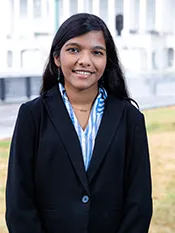
Sonal Churiwal: "Who is 'India's Daughter': Caste and Religion in Sexual Violence Reporting in India"
Sonal's project analyzes caste and religious biases in Indian media's coverage of sexual violence, seeking to understand how journalistic practices fuel selective outrage at the violation of relatively privileged women while maintaining silence about the violation of multiply marginalized women.
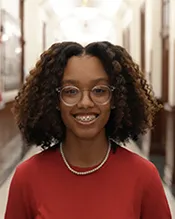
Halla Jones: "In Search of Our Mother's Gardens, We Found Our Own"
Halla’s project explores African American quilting traditions through a Black feminist lens. Seeking to answer the question proposed by Alice Walker — “How was the creativity of the Black woman kept alive, year after year and century after century, when for most of the years Black people have been in America, it was a punishable crime for a Black person to read or write?” — this project conducts a historical analysis of African American women’s use of quilting as a creative outlet and mode of self-expression.
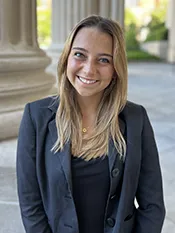
Marissa Mathieson: "When Loss Becomes Adaptation: Rethinking Decline and Continuity in Indigenous Canoe"
Marissa’s project challenges the assumption that cultural change signals cultural loss by analyzing how Indigenous communities strategically adapt, rather than simply lose, traditional practices in certain (but not all) circumstances. Predominantly using Samoa’s paopao canoe as a case study, as well as explorations of Navajo, Native Hawaiian and Maori traditions, she questions whether Indigenous cultural transformation is always a sign of disappearance or whether, at times, it can be a sovereign act of negotiating preservation and innovation.
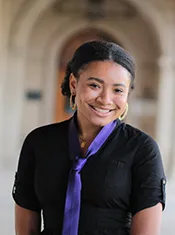
Avery Melton-Meaux: "Queering Connection: Nigerian Queer Poetry in the Twenty-First Century"
Avery’s project examines the emerging genre of queer Nigerian poetry in the 21st century, drawing on postcolonial, queer and formalist theories.
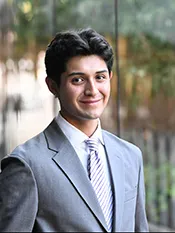
Emilio Parra-Garcia: "Commons of Care: Online Spaces as Resistance for Queer Minorities with Eating Disorders"
Due to the lack of intersecting research, Emilio’s project seeks to integrate eating disorders into queer theory and disability studies. He is specifically looking at how queer minorities have found community, kinship and a possibility for recovery in online spaces, such as Reddit threads and Facebook support groups. These spaces serve as sites of radical resistance to social and clinical displacement. He is focusing on concepts such as feminist and queer commons, care work and glitch theory to ground his analysis.
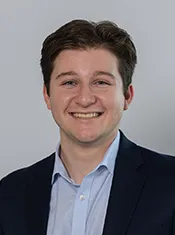
Ryan Altman: "Becoming White: Holocaust Refugees, Race, and Empire in Northern Rhodesia"
Through the study of Holocaust refugees who escaped to Northern Rhodesia during WWII, Ryan seeks to expose how Jews were viewed as "White" or "European" in the British Empire, even if they were viewed as non-white in Europe. Through this, he aims to show the fallacy of the British Empire's notion of race.
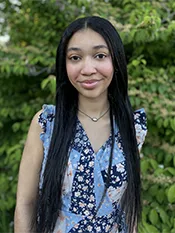
Lauren Perkins: “Misplaced Hope or a Substantive Avenue for Change? Evaluating the Effectiveness of Co-ethnic Representation at the Local Level”
Lauren’s project aims to gauge the extent to which co-ethnic political leadership has translated into material benefits for African American constituents. She plans to explore this question through a case study of St. Louis’ first African American mayor, Freeman Bosley Jr., within the larger context of U.S. electoral politics as a means for Black social advancement.