Holocaust Memorial Lecture

Holocaust Memorial Lecture

The annual Holocaust Memorial Lecture was inaugurated in 1989 by then-Chancellor William H. Danforth, who, at the request of both students and faculty, appointed a committee to establish a permanent lecture. Held on or near November 9, the anniversary of the Kristallnacht pogroms in Nazi Germany, the lecture aims not only to commemorate the Holocaust but also to address its broader implications for other instances of systematic persecution, mass murder and genocide. The lecture customarily alternates between speakers who concentrate specifically on aspects of the Holocaust and those who speak more generally about modern genocide, international conflict and humanitarian aid or concentrate specifically on particular instances of genocidal violence. Past speakers have included well-known public figures and leading scholars of both the Holocaust and other historical mass traumas. 

Each speaker is selected by the Holocaust Memorial Committee, which is composed of faculty, students and staff. The committee includes the following:

  • Erin McGlothlin, Chair, Vice Dean of Undergraduate Affairs, Gloria M. Goldstein Professor of Holocaust Studies, and Professor of German and Jewish Studies
  • David Cunningham, Professor of Sociology
  • Stephanie Kirk, Director of the Center for the Humanities, Professor of Spanish, of Comparative Literature, and of Women, Gender, and Sexuality Studies
  • Anne Schult, Assistant Professor of History
  • Carly Wayne, Assistant Professor of Political Science
  • Molly Schneider, Graduate Student, Sociology
  • Chrise Schuetz, Graduate Student, German & Comparative Literature
  • Sylvia Sukop, Graduate Student, Germanic Languages and Literatures
  • Delilah Tefertiller, Undergraduate Student
  • Conner Yamnitz, Undergraduate Student

Sign up for our newsletter

Join our email list to receive information about the annual lecture series.

Subscribe

Current event

Scott Straus

2025–26 Holocaust Memorial Lecture

‘Unimaginable Atrocities’: The Neglected Catastrophe in Sudan and the History of Genocide in the Region

Scott Straus, Professor and Chair, Charles and Louise Travers Department of Political Science, University of California, Berkeley

5 pm, November 10, 2025
Umrath Lounge in Umrath Hall


Political scientist and former international journalist Scott Straus will discuss the ongoing mass atrocities occurring in Sudan. He will place the atrocities in historical and regional context and explore the implications for contemporary policies of genocide prevention.

About the speaker

Scott Straus is professor of political science and the 2023 Mahatma M.K. Gandhi Fellow of the American Academy of Political and Social Science. He studies political violence, genocide, human rights and post-conflict politics with an empirical focus on sub-Saharan Africa. He is the author or editor of nine books, including Making and Unmaking Nations: War, Leadership, and Genocide in Modern Africa (Cornell, 2015), which won the Grawemeyer Award for Improving World Order, the Lepgold Prize from Georgetown University, the Best Book in Conflict Processes from the American Political Science Association and the Best Book in Human Rights from the International Studies Association. Straus also wrote The Order of Genocide: Race, Power, and War (Cornell, 2006), which won the Best Book in Political Science from the Association of American Publishers and Honorable Mention for the Melville Herskovits Prize from the African Studies Association. He is a coeditor of vol. III of the Cambridge World History of Genocide (Cambridge, 2023), the author of Fundamentals of Genocide and Mass Atrocity Prevention (U.S. Holocaust Memorial Museum, 2016), and co-author, with Barry Driscoll, of Introduction to International Studies: Global Forces, Interactions, and Tensions (Sage, 2022, 2nd ed.). He has received fellowships from the Harry Frank Guggenheim Foundation, the Andrew Mellon Foundation, the National Science Foundation, the Social Science Research Council, and the United States Institute of Peace. In 2016, President Obama appointed him to the Council of the U.S. Holocaust Memorial Museum, and Straus continues to serve on the Museum’s Committee on Conscience. Prior to his academic career, Straus was a freelance journalist based in Nairobi; he was nominated for a Pulitzer Prize for his 1996 coverage of the war in the Democratic Republic of Congo.

EVENT PAGE

Past lectures

2024–25  

VIDEO
Caroline Sturdy Colls
“The Evolution of Mass Murder: Forensic Archeological Perspectives on Mass Violence at Treblinka Labor and Extermination Camps”
Why Treblinka, part of ‘the largest single murder campaign within the Holocaust,’ remains unknown to Americans, by Erin McGlothlin

2023–24  

Ari Joskowicz
“Roma, Jews, and the Holocaust”

2022–23  

Jeffrey Veidlinger
“The 1918-1921 Pogroms in Ukraine and the Onset of the Holocaust”
Ukraine and a forgotten chapter in Holocaust history, by Sylvia Sukop

2021–22  

VIDEO
Natalia Aleksiun
“Jewish Physicians and Their Patients: Rescue Strategies in Nazi-Occupied Poland”

2020–21  

Virtual Roundtable with Avril Alba, Zahava D. Doering and David Cunningham
“Legacies of Violence and Genocide: Can Memorials and Museums Help Us Build a Better Future?”
On Legacies of Violence, Genocide, and Implicated Subjects: Arts and Museums as Influence and Response, by Deniz Gündoğan İbrişim

2019–20  

Jason De León
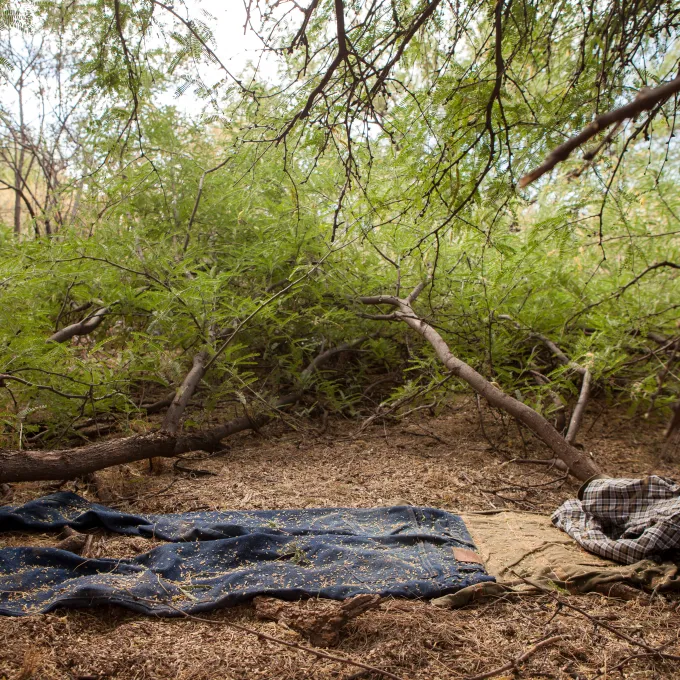
“The Land of Open Graves: Understanding the Current Politics of Migrant Life and Death along the US/Mexico Border”
On Borders and Unnatural ‘Natural’ Deaths, by Tabea Linhard

2018–19  

Sue Vice
“The Holocaust in Literature and Film: Revisiting Claude Lanzmann’s Shoah”
Claude Lanzmann’s Shoah and Its Archive of Outtakes, by Erin McGlothlin

2017–18  

Crystal Feimster
“The Greatest Outrage of the Century: White Violence and Black Protest in in America”
‘A Time to Lift One’s Voice’: The East St. Louis Riot in a Migration Perspective, by Douglas Flowe

2016–17  

Doris Bergen
“Holocaust or Genocide: Uniqueness and Universality”
The Holocaust and the ‘Whew’ Effect, by Erin McGlothlin

2015–16  

Jay Winter
“The Holocaust and the Armenian Genocide”
Violence and Memory, with Anika Walke and Jay Winter

2014–15  

David Shneer
“Through Soviet Jewish Eyes: Photography, War and the Holocaust”

2013–14  

Sarah Wagner
“Srebrenica’s Legacies of Loss and Remembrance”

2012–13  

Aron Rodrigue
“Some Reflections on Sephardic Jewries and the Holocaust”

2011–12   

David Rosen
“The Moral Complexity of the Child Soldier ‘Problem’”

2010–11  

Marianne Hirsch
“Rites of Return: The Afterlife of the Holocaust in Jewish Memory”

2009–10  

Benedict Kiernan
“Blood and Soil: Genocide in World History”

2008–09  

Daniel Mendelsohn
“Finding ‘The Lost’: A Journey into the History, Family, and Judaism”

2006–07  

David Rieff

2005–06  

Christopher Browning
“Holocaust Denial in the Courtroom: The Historian as Expert Witness”

2004–05  

Peter Balakian
“The Armenian Genocide and America’s First International Human Rights Movement”

2003–04  

Adam Hochschild
“The Holocaust and the Congo: Then and Today”

2002–03  

Jan Gross
“Neighbors: The Destruction of the Jewish Community in Jedwabne, Poland”

2001–02  

James E. Young
“A Holocaust Memorial for Berlin?”

2000–01  

Philip Gourevitch
“The Rwandan Genocide”

1999–00  

Saul Friedländer
“The SHOAH: Memory, History and the Historian”

1998–99  

Louise Arbour
“Prosecutions before the International Criminal Court”

1997–98  

Michael Berenbaum
“The Holocaust and its Remembrance”

1996–97  

M. Cherif Bassiouni
“Stopping Impunity for International Crimes”

1995–96  

Steven Katz
“Holocaust and Mass Death: Variations and Differences”

1994–95  

Ernst Stein
“The Rise of Neo-Nazism in Germany”

1993–94  

Ian Hancock
“Gypsies, Germany and the Holocaust”

1992–93  

Elie Wiesel
“When the Unthinkable Happens”

1991–92  

William Shawcross
“Holocaust and Cambodia”

1990–91  

Robert Jay Lifton
“Beyond Genocide – Learning from the Nazi Doctors”

1989–90  

Arno Mayer
“Terror and Violence under Hitler and Stalin: Issues in Studying the Holocaust”