Interview with Faculty Fellow Esther Viola Kurtz
In ethnomusicologist Esther Viola Kurtz’s current book project, “Jazz Values: Living from America’s Music under Racial Capitalism,” romantic notions about jazz musicians’ devotion to craft give way to the real personal and economic costs to the performers who sustain this art form. Blending ethnography, history and economic critique, Kurtz reframes jazz not just as music, but as labor shaped by racial capitalism’s unequal valuations of people and their work. Below, she offers a peek at her project, explaining why jazz musicians persist, what their “jazz values” reveal about alternative ways of living and how their stories challenge the myths we tell about art and success.
Briefly, what is your book about?
The book is about jazz, race, labor and capitalism in St. Louis. Jazz musicians work so hard, putting in hours of unpaid labor into their craft, but many of them don’t earn a living wage. For instance, gigs usually pay $100 or less — the same $100 that the same gig paid in the 1980s, with no adjustment for inflation. Why is it that jazz is so often celebrated as America’s greatest musical contribution to the world but no one wants to pay jazz musicians?
Digging into this question, I’ve found that I need to understand how racial capitalism functions as a system that differentiates and ranks humans along a spectrum of value. That is, it determines whose lives matter more and whose matter less or not at all. This framework reveals that jazz musicians are treated like other workers whose labor and lives are devalued, like healthcare or service industry workers. There are important differences in the details, like the way jazz musicians’ “talent” is fetishized, but I still find that jazz labor is not a wholly unique case. Rather, it is a limit case, whose extreme conditions illuminate broader truths.
I argue that jazz musicians are socially reproductive laborers: They do work that maintains communities emotionally, intellectually and materially. They run jam sessions to raise future generations of players, and they play performances that function as social care, producing joy, pleasure and healing. The book thus brings new meaning to the idea that jazz is “America’s music,” for the jazz economy so neatly encapsulates the inhumanity of America’s capitalism.
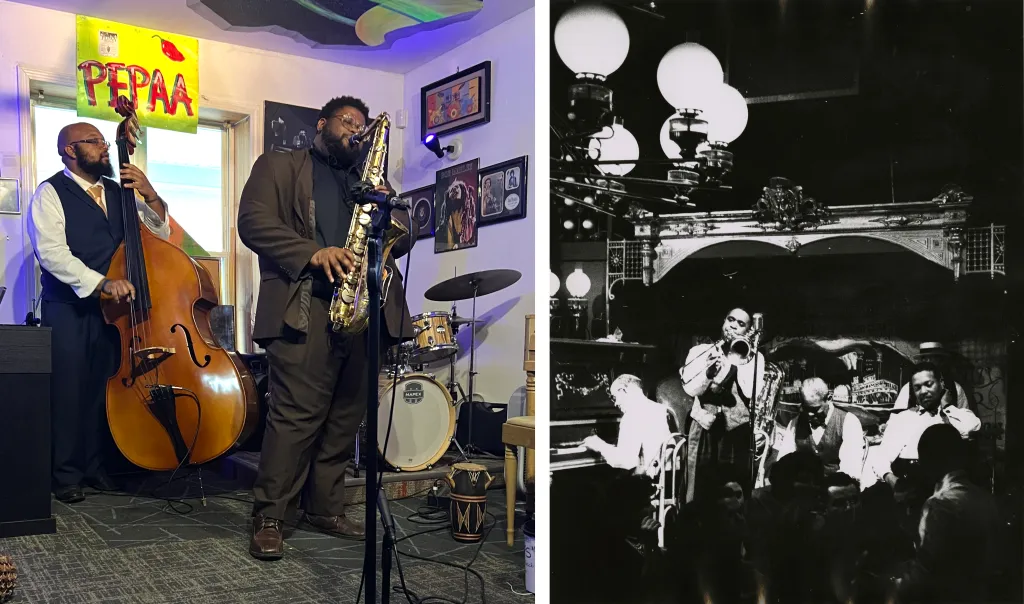
How does your research differ from earlier ethnographic jazz studies?
There have been some really important ethnographies of jazz musicians that make my study possible. Works like Paul Berliner’s Thinking in Jazz and Ingrid Monson’s Saying Something explore jazz improvisation in depth — how musicians learn to improvise, how they communicate with one another and how they build community in the process. Travis Jackson’s Blowin’ the Blues Away focuses on how jazz musicians make meaning through their performances.
My study departs from these precedents in several ways. For one, I kind of flip the jazz ethnography on its head, focusing on the musicians’ material realities more than the music. Jazz music holds a captivating power over those who love it — and I include myself in this group — but in the literature this means that the focus on the music can overshadow other concerns. Clearly, musicians must meet their basic needs to make this music we love, but the literature tends to ignore, romanticize or normalize their economic struggles. As a result, it is implied that good artists don’t mind starving.
Another way this book breaks with long-standing patterns is its focus on the St. Louis jazz scene, in contrast with so much jazz writing focused on New York City, New Orleans or other coastal U.S. cities. This continues the approach I took in my first book on capoeira in backland Bahia, Brazil: Rather than focus on famous figures or the centers of jazz activity, I am interested in the lived realities of lesser-known players working in the peripheries. After all, these kinds of players make up the vast majority of jazz musicians today. It’s not about level — some of the musicians in St. Louis today play at a level on par with internationally celebrated jazz artists — it’s about how their work is nevertheless (de)valued, why they stay dedicated to it and how they struggle to survive and thrive in conditions structured by racial capitalism.
Tell us about your concept of “jazz values” — how do they line up against the ideas and rewards of capitalism?
This brings me to the concept of “jazz values”: This is my (tentative) answer to the question of why jazz musicians in St. Louis stay committed to the music and their practice even though it makes their lives difficult. Jazz values can also model potential responses to capitalism. As I’m thinking of them now, jazz values are the philosophies and orientations that musicians leverage to navigate the degrading conditions of racial capitalism and sustain their art form and one another. More concretely, jazz values are drawn from knowledge cultivated in Black communities, and they include response-ability, compromise, intergenerational care, reciprocity and fellowship, among others.
As an alternative value system, jazz values fundamentally conflict with capitalist values of possessive individualism, profit maximization, short-term gains and accumulation. This is why the musicians are caught between worlds: succeeding in a capitalist value regime looks very different from success in the jazz realm — if the concept of “success” is even applicable. For example, musicians these days are told they should think like entrepreneurs: develop their “brand,” market themselves, create a business. Yet capitalism demands of businesses that they pursue constant growth. When your income comes from live performance and giving one-on-one lessons, there is simply no way to achieve limitless growth. Yet this is also why I find that jazz musicians counter the compulsory forces of capitalism: They show that other ways of valuing and caring for humanity are possible.
Tell us about the musicians, organizations and institutions who will be featured in your book.
Since moving to St. Louis in 2018, I have been attending jazz performances and jam sessions, and I hope to include many of the musicians I’ve gotten to know on the local scene. There will also be a historical component to the project. Jazz and popular music fans know that St. Louis has been home to numerous musical innovators, from singer-performer “Mama Lou” Rogers to ragtime composer Scott Joplin and trumpeters Clark Terry and Miles Davis. But there are also figures who have been almost forgotten, but who were crucial for developing St. Louis’ musical economy in the early 20th century, such as concert promoter and entrepreneur Jesse Johnson, who booked dance bands on the riverboats. By revisiting the economic lives of these figures, I am tracing how they struggled — and sometimes triumphed — within and against a violent capitalist system.
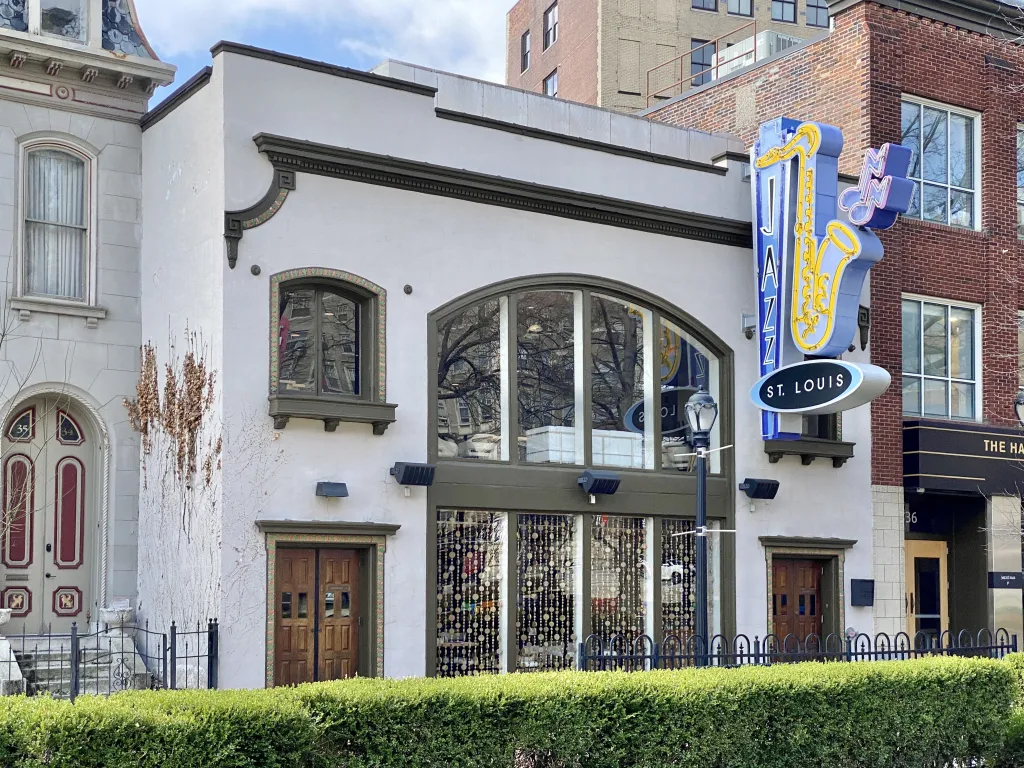
These buried histories have not only shaped today’s labor conditions, but they also inspire jazz musicians today. One example is saxophonist, composer and educator Kendrick Smith. In addition to being a phenomenal player and bandleader, Smith is very dedicated to continuing St. Louis’ jazz tradition of intergenerational mentorship and, as he puts it, to keeping “jazz music alive and moving forward.” He hosts weekly jam sessions, is working on a documentary about East St. Louis’ jazz history and has founded the Build A Yes Jazz Music Society. I also plan to write about Jazz St. Louis and the Kranzberg Arts Foundation, both of which are so important for sustaining the jazz ecosystem in St. Louis.
Money matters have always been a central concern for musicians and musical organizations, but so little literature addresses this topic. This is why I am so eager to listen to the musicians and amplify their perspectives.
What sources are you looking at in your research?
As my primary methods are ethnographic, the most important “sources” are the jazz musicians working in St. Louis. I have been developing relationships with some of them for years now, and in our conversations everyone I talk to is very excited for this project. I’m really looking forward to doing more interviews, as that is always such a rewarding process.
Another major aspect of ethnography is often referred to as “participant-observation,” or as Clifford Geertz famously put it, “deep hanging out.” For this project, I have started playing oboe and saxophone again after a few years of putting them aside as I finished my first book. I’ve been playing in local jam sessions, working on improving my jazz improvisation skills. Throughout my career as an oboist, I performed and improvised with jazz musicians, but now I am focusing on learning tunes and developing a stronger jazz vocabulary.
I have also started visiting archives, such as the Missouri Historical Society’s Library & Research Center, and combing through old newspapers. So many articles in the papers about music and the arts are about finances, which just confirms my sense that there are so many untold stories to uncover. Money matters have always been a central concern for musicians and musical organizations, but so little literature addresses this topic. This is why I am so eager to listen to the musicians and amplify their perspectives.
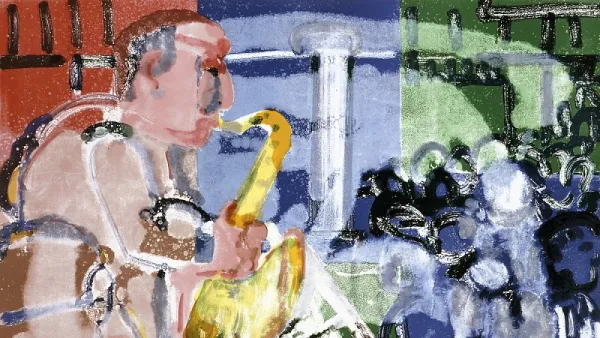
Headline image: Bopping at Birdland (Stomp Time) (1979) by Romare Bearden, from the Jazz Series. Image courtesy Smithsonian American Art Museum, Gift of Eugene I. Schuster.