Through the Kling Undergraduate Honors Fellowship, WashU students are given the rare chance to stay with an idea long enough to let it change shape — and, often, to let it change them.
As a time for the exploration of new interests and fields, undergraduate study seems to increasingly collide with an ever-growing list of must-dos — internships, work experiences, clubs and jam-packed course schedules. For today’s undergrad, the most radical offering might simply be time. Through its Kling Undergraduate Honors Fellowship, the Center for the Humanities grants undergraduates exactly that: two years to ask a question they don’t yet know how to answer.
The Kling fellowship carries a $6,000 research stipend over its duration and supports students over their junior and senior years as they pursue a humanities research project on a topic of their own choosing. While many fellows pursue humanities majors or minors, it’s not a requirement. Their common denominator is curiosity — and a commitment to follow that instinct in new directions.
The program centers on a weekly seminar led by the director of the Center for the Humanities and brings together two cohorts for discussion-rich meetings. Each fellow also works closely with a designated faculty mentor while conducting independent research. Ultimately, students produce a scholarly article for the fellowship’s research journal.
An independent research project can feel solitary in theory. In practice, it's a deeply scaffolded process, surrounding students with sustained mentorship, structured milestones and a cohort moving alongside them, says Stephanie Kirk, professor of Hispanic studies and director of the Center for the Humanities, who leads the fellowship.
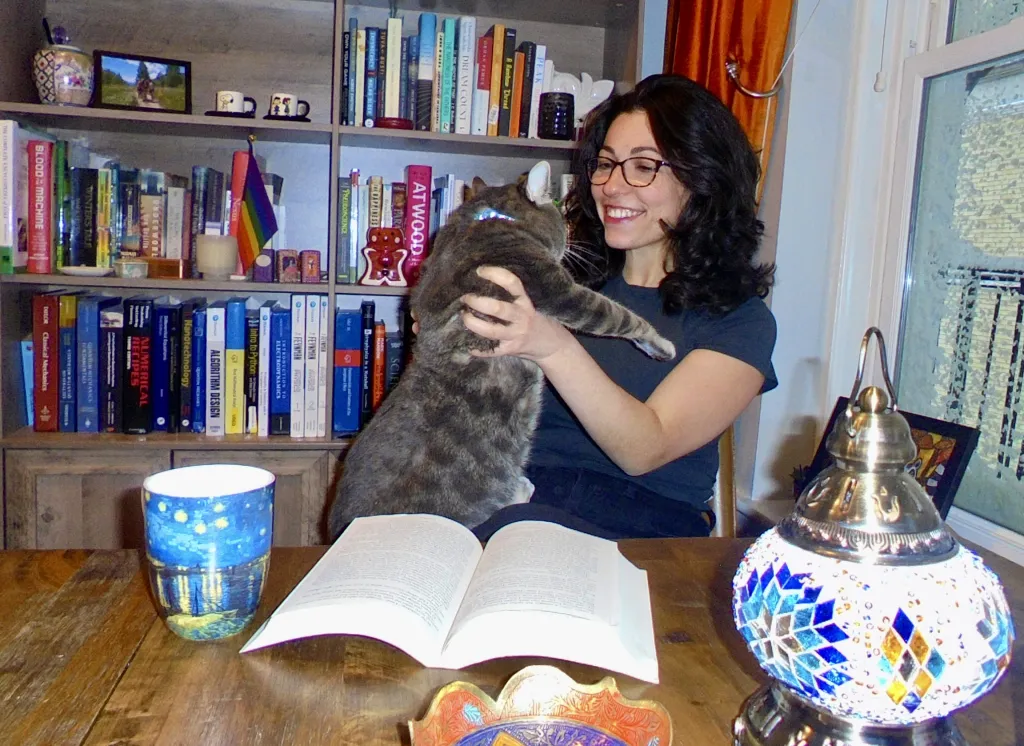
Degree: Religious Studies
Article: “Sensual Desires and Bestial Indulgences: Sexual Sin as a Cause of the Flood in Midrash and Oryx and Crake”
Current role: Paralegal, Cloherty & Steinberg
Current location: Boston
“I knew that I was interested in how technological advances intersected with sexual politics, but I didn’t know how to translate this into a fully formed paper. I’m really grateful to the Kling leadership and my mentors for guiding me towards sources that did the kind of work that I hoped to emulate, and for helping me maintain my vision.”
From developing a proposal, drafting a literature review and revising the final article, fellows receive (and offer) sustained feedback at every stage. They learn how to assess work outside their home discipline, talk concisely about their research, partner with subject librarians and develop a writing practice.
“We also have discussions on what it means to be a member of a community, to feel immensely invested in one another’s work,” Kirk says.
Most students spend their junior year refining their research questions and immersing themselves in scholarship, then devote their senior year to writing. The timeline is intentionally flexible, allowing ideas to evolve.
“Good research takes time,” says Meredith Kelling, the humanities center’s assistant director for student research and engagement. “There are so many new pressures on undergraduates. The fellowship offers a refuge that allows good scholarship to flourish.”
The two-year arc of the fellowship, Kirk adds, allows “allows an unusually luxurious chunk of time to be able to dig deeply into research, to take a wrong turn or to go down some blind alleys.”
Lena Levey, a 2025 graduate with a degree in religious studies, began the fellowship thinking she would focus on climate change. “Instead, I ended up writing about portrayals of sexual sin in Jewish rabbinical texts and [Margaret Atwood’s] contemporary science fiction,” she says. “It was only at the end of my junior year, after over a full year of reading and rereading sources, that I was able to home in on what I was truly passionate about.” Levey is now working as a paralegal in Boston, drawing on her experience in research and textual analysis.
Her final article, “Sensual Desires and Bestial Indulgences: Sexual Sin as a Cause of the Flood in Midrash and Oryx and Crake,” was accepted for publication by the peer-reviewed Margaret Atwood Studies Journal — an uncommon undergraduate accomplishment.
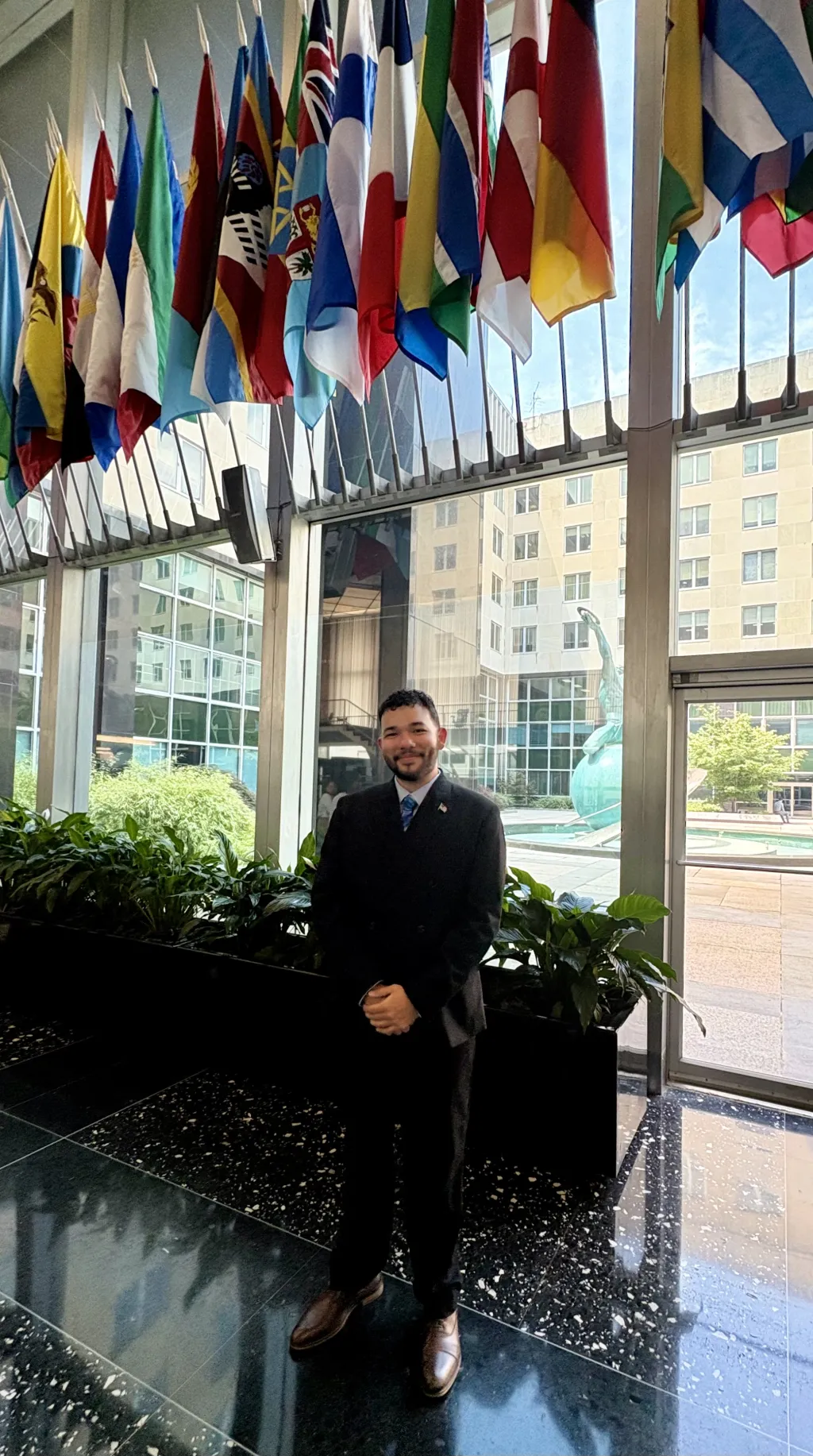
Degree: Global Studies
Article: “The Ideal Monster in Conflict-Related Sexual Violence”
Current role: Charles B. Rangel International Affairs Fellow, U.S. State Department, and graduate student, Johns Hopkins University School of Advanced International Studies
Current location: Bologna, Italy
“Most definitely apply for the fellowship if you have any interest in any of the program's components. Throughout the application and beyond, permit yourself to be intellectually curious and speak and write about the (other)worldly topics that fascinate you. The issues that interest you most are likewise most deserving of your attention and efforts.”
Jeffrey Camille, who graduated cum laude in global studies, describes the process in similar terms. His junior year was spent “reading scholarship and talking to scholars, discovering topics that fascinated me, fashioning and unfashioning how I could explore them.” As a senior, he molded that year of exploration into an original article.
Faculty mentors are an integral part of the program, providing discipline-specific advising and working closely with fellows in ways that differ markedly from the usual classroom dynamic. Fellows serve as principal investigators of their own projects, while mentors provide guidance and critical feedback.
For Camille, it started with an email. He reached out to Rachel Brown, assistant professor of women, gender and sexuality studies, to pitch his project, and she accepted. Andrew de las Alas, who graduated cum laude with a degree in international affairs and minors in sociology and Asian American studies, met his mentor, Chris Eng, former assistant professor of English (now at the University of Maryland), at a departmental event for his minor. He credits Eng with teaching him to “trust the writing process, and to think beyond convention.”
The research, writing and presentation skills honed throughout the fellowship uniquely prepare fellows for whatever comes after commencement. While some pursue graduate study, others head to law school, nonprofit or public service or the private sector. The emphasis is not an academic pipeline but transferable habits of mind: rigorous research, iterative revision and persuasive communication.
As Levey notes, the fellowship may not have been the most obvious legal apprenticeship, but it helped to prepare her for current position: “Even though my project was about gender and literature, a lot of the project management skills that I developed in Kling have helped me in my transition to work post-college.”
De las Alas, who is now a youth organizer with the HANA Center in Chicago, says that the fellowship refined his ability to synthesize sources efficiently and iterate on those findings. Those skills have been essential in his work with immigrant high school students to implement Illinois’ legislative mandate for Asian American Studies in K-12 public education. “For example, I employed my research skills to identify specific sections of legislation governing immigration law enforcement my students could cite for public comment,” he says.
But Kling is not just a curriculum. It is also a cohort. In the weekly seminars, fellows read and critique one another’s drafts. They recommend texts across disciplines. Guest speakers — including the humanities center’s own Graduate Student Fellows and Faculty Fellows — introduce students to the broader ecosystem of academic life and research.
The result is intellectual cross-pollination. “I'm still in touch with many of my friends from Kling, and I loved getting to learn so much about their passion,” Levey says. “I got exposure to fields like economics, trans studies, political science and philosophy. This structure added vital nuance to my project.”
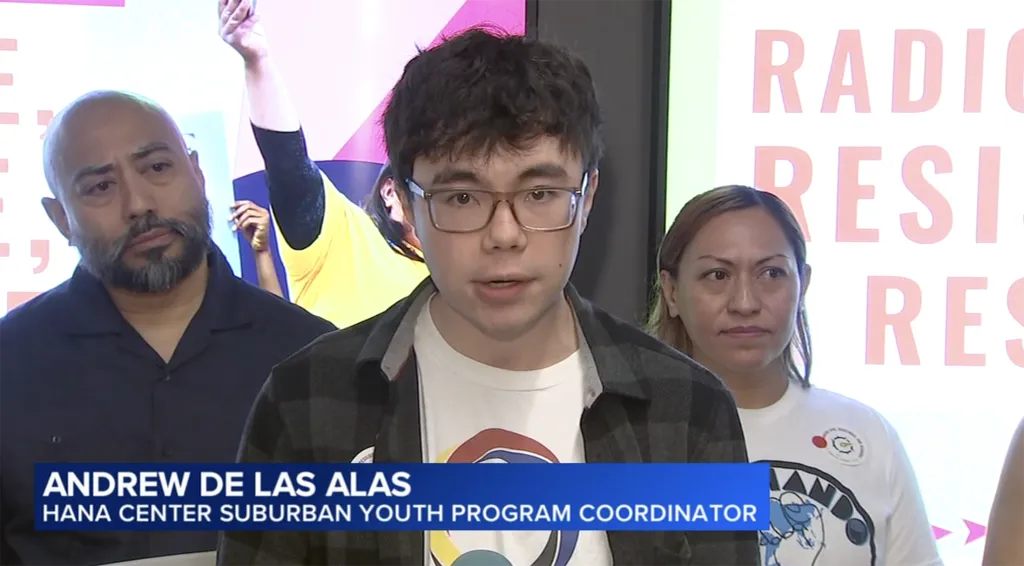
Degree: International Studies
Article: “Gateway to the East: Filipino Americans in a Black and White City”
Current role: Youth organizer, HANA Center
Current location: Chicago
“For many, their research interests coincide with their lived experiences. The academy was not built for most people in mind, so I’d encourage you to assert your life as a primary source.”
De las Alas echoes that sentiment: “It’s lovely to not just create, but to create with friends.”
While the idea of a two-year research commitment may feel daunting, current and graduated fellows consistently encourage students to apply. The Kling program offers something increasingly rare: permission to take a question seriously before knowing where it will lead. And in taking the time to evolve as scholars in its pursuit, fellows learn how to ask better ones.
“I very nearly didn't apply because I assumed that my idea wasn’t focused enough,” Levey says. “I assumed that because I didn’t know exactly what I wanted to do, I wouldn’t be a good fit. I’m so glad I pushed myself out of my comfort zone to submit an application, and I tell all of my friends in the years below me to do the same.”
Headline photo by Danny Reise/WashU