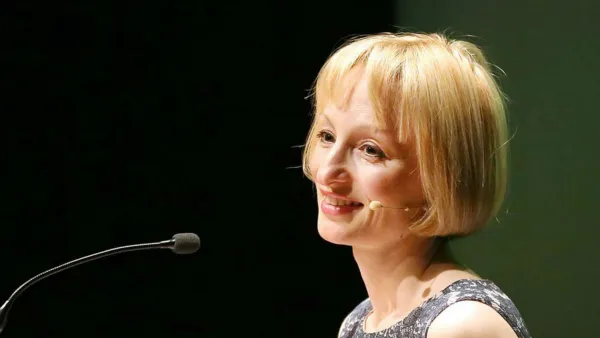
This piece commemorates the panel discussion “The Political Economy of Translation,” organized by the Global Comparative Humanities Working Group, which took place on February 4, 2026, at WashU. The panel featured translators AJ Javaheri (Farsi), Mona Kareem (Arabic) and Ena Selimović (Bosnian, Croatian, Montenegrin, Serbian). The discussion was moderated by Comparative Literature and Thought graduate student Safa Khatib and Anca Parvulescu, the Liselotte Dieckmann Professor in Comparative Literature.
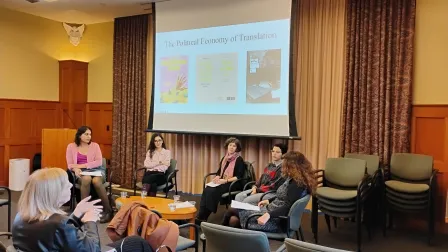
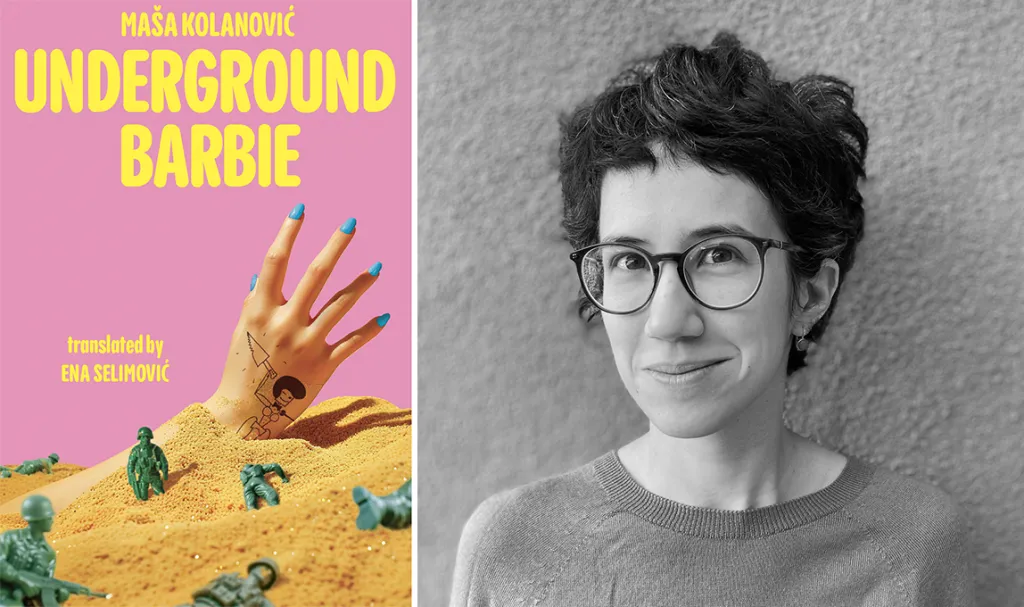
We were five women talking translation: three translators seated between two moderators, one on each end, asking questions. A projector screen hung from the ceiling, displaying the covers of three books and their titles: Underground Barbie, Salto and Except for this Unseen Thread. As we spoke, a particular thread seemed to haunt the conversation: how to make sense of the “anglophone reader,” the person for whom these books carried over from their languages (Arabic, Croatian, Farsi) into English? When literature in translation represents only about 3 percent of the U.S. literary market, with most of that share representing work translated from Western European languages, how do we imagine the reader of literature in translation from marginalized languages?
The anglophone reader seemed everywhere and nowhere, without a fixed identity or geographical home. At the same time, their story is specific, the result of colonial wars of expansion that have shaped the possibilities of literary publication, circulation and reception in standardized English around the world. I imagined the anglophone reader sitting at a seemingly infinite distance, shape-shifting, eluding our grasp. At the same time, they seemed so close by, as if they could be anyone in the room. Their interior, when I could picture it, appeared only as the blood-damp chambers of the black site, their eyes the grated windows of the North American prison, their tongue a map of a shifting global network of U.S. military bases. As Sarah Brouillette has written, thinking about the reading of books in English in the wake of the 1980s requires understanding the U.S. government’s strategic use of international book donation programs as a corollary of both military intervention and economic structural adjustment schemes.
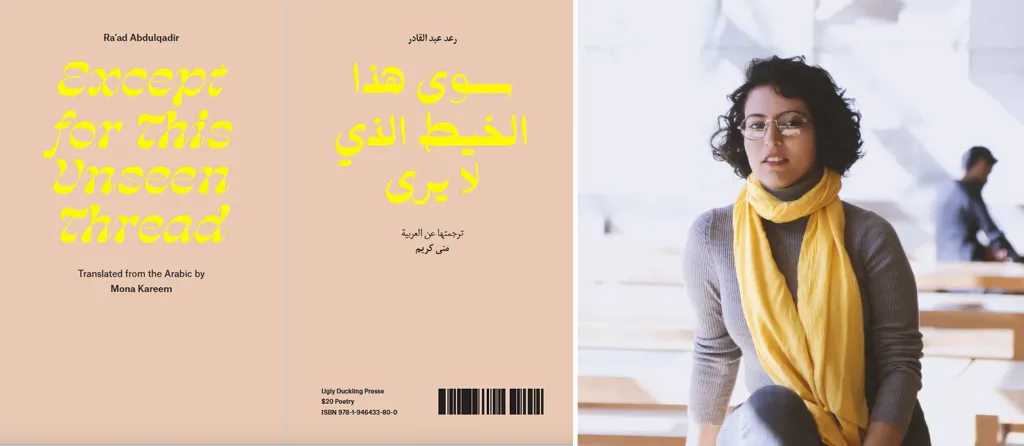
The panel began with a question about how the translators deal with the anglophone reader’s expectations. “Often,” Mona Kareem said, “an editor would tell me a translation choice didn’t work because, in his words, the ‘anglophone reader wouldn’t understand it.’ Once you begin to translate, you realize all these patronizing assumptions people have about what the anglophone reader can tolerate.” She argued that it was important, therefore, for the translator to resist the erasure of historical memories embedded in the text. The translation of poetry in particular, Kareem added, forces the reader to pay attention and disorient themselves. Ena Selimović reminded the audience that, given the inseparability of the U.S. literary market from the infrastructure of U.S. government, literature from marginalized languages has a paradoxical relationship to the anglophone reader in the U.S.: On the one hand, the devastation wrought by U.S. and British imperial wars sparks this reader’s curiosity about a “new” region or language. On the other, literary translators from the affected regions can seize the opportunity to transmit into English the knowledge necessary to refuse the lure of American propaganda.

Later, another question addressed U.S. educational institutions withdrawing financial support for language study, a development that would shape the mind of the anglophone reader to come. When asked how she would respond to this situation, AJ Javaheri said: “I think a monolingual life is a very sad life.” She spoke about how contemporary Iranian literature remained virtually unread in the United States, resulting in absurd assumptions about what that literature might convey. The conversation then turned toward the limitations of thinking in a single language, even with familiar texts. Even to read a thinker as foundational as Freud, Selimović pointed out, is to find him suddenly speaking multiple tongues in print; nowhere is there mention of his many translators, if he isn’t read in German. Eventually, she called out the question for us all: “Where are you, O anglophone reader, where are you?!” she shouted to the ceiling, throwing up her hands as if exasperated. This question sparked a long burst of laughter from everyone in the room.
It was this laughter that lingered in the room. And the longer this laughter stayed with me, the more the “anglophone reader” began to unravel into something else. The anglophone reader we might imagine is perhaps better understood as a record of our tendency to forget the taste, however brief or elusive, of other lives we might have lived (and might still live), other geographies we might have traveled, other tongues we might have spoken daily (and might still speak). Perhaps we all laughed with Selimović because of a recognition that the fiction of the “anglophone reader” represents the real seduction of such amnesia. Perhaps our task is not to find and enlighten the anglophone reader, not even (or not only) to learn and read in multiple languages, but to risk whatever is necessary to destroy the “anglophone reader” within ourselves. Anything less might be to risk forgetting ourselves entirely.
Learn more about the Global Comparative Humanities Working Group.
Headline photo by Patrick Tomasso via Unsplash.